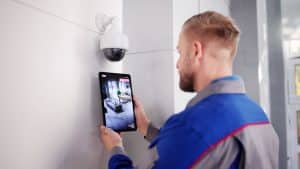
The break-in wasn’t loud. There was no shattered glass, no forced door, and no triggered siren. A hacker quietly accessed a small business’s alarm system through an outdated app integration, disabled the motion sensors remotely, and walked away with thousands of dollars in equipment, without leaving a trace. The system had done everything it was supposed to-except protect.
As alarm systems have evolved to include Wi-Fi connectivity, cloud storage, and smart home integrations, so have the threats that come with them. Many installers and their clients assume that newer means safer. But in reality, these systems open the door to a new kind of threat—one that doesn’t break locks but slips through software.
This kind of breach—silent, remote, and devastating—is becoming more common. And for alarm installers, it’s not just a tech issue. It’s a business liability. Understanding where vulnerabilities exist is no longer optional, and it’s part of doing the job right.
From Wired to Wireless to Web-Based: This History of Alarm
The systems you install today are a far cry from the early mechanical alarms of the past. Understanding how we got here, both technologically and professionally, offers more than a history lesson. It provides a lens into how vulnerabilities evolved right alongside innovation.
The Wired Beginnings
In 1853, American inventor Augustus Russell Pope patented the first electromagnetic alarm system. This innovative design utilized an electric circuit that, when disrupted by opening a door or window, triggered a hammer to strike a bell, alerting occupants of an intrusion. While groundbreaking, these early systems required extensive wiring and were limited by the technology of the time.
Transition to Wireless Technology
The 1980s and early 1990s witnessed a pivotal shift with the innovation of wireless security systems. Manufacturers sought alternatives to traditional wired setups, leading to the development of wireless sensors that communicated via radio frequencies. This transition reduced installation complexities and offered greater flexibility. However, early wireless systems faced challenges such as limited range and susceptibility to interference, which sometimes compromised their reliability.
Advent of Smart, Web-Based Systems
Entering the 21st century, alarm systems became integral components of the Internet of Things (IoT). Modern security solutions now offer remote access, real-time alerts, and integration with other smart devices. Homeowners can monitor their properties via smartphones, receiving instant notifications of any disturbances. While these advancements provide unparalleled convenience and control, they also introduce vulnerabilities. Internet-connected devices can be targets for cyberattacks, potentially exposing personal data and compromising security.
Common Alarm System Hacking Vulnerabilities
No system is bulletproof. But knowing where the cracks usually form gives you a serious advantage. Use this checklist to catch the common vulnerabilities that can lead to silent sabotage.
1. Weak Default Passwords
Still one of the top reasons systems get hacked—and one of the easiest to fix.
- Always change the default admin password before finalizing the install
- Use a password manager to generate and store strong, unique credentials
- Require clients to change passwords after installation
- Avoid using device serial numbers or predictable combinations
- Enable two-factor authentication if the system allows it
According to a study, 86% of users never change default credentials on their router, putting entire systems at risk.
2. Unencrypted Communication
If data isn’t encrypted, it can be intercepted and manipulated.
- Only install systems that support end-to-end encryption
- Use HTTPS when connecting to cloud-based portals
- Avoid transmitting credentials or video feeds over public networks
- Check the manufacturer’s encryption protocol before recommending devices
- Update routers with WPA3 whenever possible
HelpNetSecurity reports that many IoT devices still use unencrypted protocols by default, exposing sensitive data during transmission.
3. Outdated Firmware
Old firmware is a flashing target for cyberattacks and often overlooked.
- Check for firmware updates before and after installation
- Set reminders for clients to perform regular firmware checks
- Enable automatic updates when the option exists
- Only source from manufacturers with a reliable update history
- Document all firmware versions as part of the final job log
A Zenarmor report found that outdated firmware is the most easily exploited from hackers. Alarming, doesn’t it?
4. Third-Party App Integrations
Convenient—but often the least secure part of a system.
- Limit integrations to apps with strong security track records
- Regularly audit which apps have access to the system
- Disable unused integrations to reduce risk
- Explain risks to clients when they request high-risk integrations (e.g., open APIs)
- Keep app permissions to the minimum necessary level
Consumer Reports recently flagged popular smart doorbells for risky third-party connections that could be exploited by attackers.
5. Wi-Fi & Network Exposur
The best alarm in the world won’t help if the network it’s on is wide open.
- Set up systems on separate, secure guest networks
- Avoid public or shared Wi-Fi during setup
- Educate clients on router security basics (firewalls, passwords, WPA3)
- Disable remote access if not required
- Use VPNs for remote administration whenever possible
HelpNetSecurity warns that poorly configured networks are prone to intrusions.
Who’s at Risk: It’s Not Just the End-User
When an alarm system fails, it’s not just the end-user who faces consequences; installers are also on the line. Understanding your liability is a significant point to protect your business and reputation.
As an installer, you’re responsible for ensuring that security systems function correctly. If a system you installed is compromised due to negligence or improper setup, you could be held liable for resulting damages. This liability isn’t limited to equipment failure; it extends to any harm caused by system malfunctions. For instance, if a fire alarm fails to alert occupants due to installation errors, the installer may be held accountable for any ensuing harm.
Moreover, clear contracts are vital in defining the scope of work and setting client expectations. Ambiguities can lead to disputes, especially if a system doesn’t perform as anticipated. A well-drafted contract should outline the services provided, limitations of liability, and the client’s responsibilities. Failure to meet these contractual obligations can result in legal action, even if the installer believes they’ve fulfilled their duties.
Lastly, improper system configuration can lead to security breaches, placing both clients and installers at risk. Misconfigured settings might leave entry points unmonitored or alarms non-functional, undermining the system’s integrity. Such oversights can damage your reputation and lead to legal consequences if clients suffer losses due to these vulnerabilities. Regular training and adherence to industry standards are essential to mitigate these risks.
Risk Management Starts at Installation
Installing the latest technology isn’t enough and how you configure it can make or break the system’s actual security. Below is a table of practical, must-do tasks that help reduce digital vulnerabilities from day one.
| Best Practice | Why It Matters | Step-by-Step Process |
|---|---|---|
| Set strong admin passwords by default | Default logins are widely known and easily exploited. Keeping them unchanged leaves the system exposed before it’s even online. | 1. Log into admin panel → 2. Generate a strong password → 3. Store securely → 4. Require client reset after handoff |
| Educate clients on network basics | Most breaches happen through weak routers and open Wi-Fi—not the alarm system itself. | 1. Ask if router login has been changed → 2. Recommend WPA3 security → 3. Disable remote router access unless necessary |
| Update firmware before and after install | Old firmware may include publicized vulnerabilities that hackers actively seek out. | 1. Check device update history → 2. Install latest firmware → 3. Enable auto-updates if supported |
| Offer post-install audits or maintenance | Systems change—networks are updated, apps are added. A single install won’t keep pace with evolving conditions. | 1. Schedule a check-up 30–60 days post-install → 2. Re-test every endpoint → 3. Document client sign-off |
| Include cybersecurity clauses in contracts | You may be blamed for a breach caused by client-side neglect unless your agreement makes those responsibilities clear. | 1. Add language outlining limits of liability → 2. Clarify client responsibilities → 3. Review contract annually with legal counsel |
How El Dorado Insurance Helps Protect Your Business
In the event of a system failure leading to property damage or bodily injury, El Dorado’s General Liability Insurance provides coverage for associated claims. This ensures that your business is protected against unforeseen incidents during installations.
For claims arising from professional errors, such as improper system setup, their Errors & Omissions (E&O) Insurance covers legal defense costs and settlements. This is crucial for mitigating financial setbacks due to installation mistakes.
Recognizing the increasing cyber threats in smart home systems, El Dorado offers Cyber Liability Insurance. This coverage addresses expenses related to data breaches, hacking incidents, and associated legal fees, safeguarding your business from digital threats.
With over 50 years of experience in the security industry, El Dorado understands the specific risks faced by alarm installers. Their tailored insurance solutions provide comprehensive protection, allowing you to focus on delivering quality service with confidence.
Takeaway
Silent breaches are real and growing. As alarm systems become smarter, they also become more exposed to digital threats. A weak password or outdated firmware could put your clients at risk and your business on the line. Taking a few extra steps during installation and making sure your insurance is up to date can make all the difference.
Alarm system installers face growing risks in a connected world
El Dorado Insurance understands your industry and offers tailored protection to help you stay ahead of the curve. Talk to us today to ensure your coverage reflects the systems you install. For more information or a consultation, visit El Dorado Insurance.